Do Snow Guards Work on Low-Pitch Metal Roofs? Effectiveness by Roof Slope
Key Takeaways
- Snow guards work on low-pitch metal roofs. Slope changes spacing and system choice, not whether the guards do their job.
- Lower pitch means slower-moving snow, which sometimes calls for wider row spacing than a steep roof needs.
- The “don’t use snow guards on low-pitch roofs” warning you may have read online almost always refers to asphalt shingles, not metal.
- Whether you’re a homeowner protecting a walkway or a contractor specifying a full commercial run, the same slope math applies. Only the scale changes.
Don’t be fooled by warnings against snow guards on low-pitch roofs, as this advice typically applies to roofs with a low pitch and asphalt shingles. A low-pitch metal roof is still in danger of releasing roof avalanches, just at a slower rate. For these guards to work, spacing and system choice change with the slope, and most roofs require fewer guards than their high-pitched counterparts.
The Short Answer Is Yes, Snow Guards Work on Low-Pitch Metal Roofs
Metal panels are slippery by nature at any pitch. What actually shifts with slope is the physics behind how a snow load builds and eventually lets go, and that’s why a flat yes-or-no answer disregards the more useful part of the question.
Why Roof Slope Changes How Snow Moves
A metal panel doesn’t grip snow the way asphalt shingles or wood shakes do. Once ice forms underneath a compacted layer of snow, an entire slab can release at once, and pitch decides how fast that happens. Steep roofs mean a slab picks up speed before it ever reaches a guard. Low pitch works differently: less vertical drop means less pulling force, so the slab moves slower and stays in contact with the guard’s surface longer, giving the hardware more time to hold it back.
What This Means if You’re a Homeowner vs. a Contractor Spec’ing a Project
For a homeowner, the practical question is: Will a slab of snow sliding off the porch roof hurt someone or crush the gutters underneath it? The answer for a low-pitch metal roof is the same as for a steep one: Yes. Install snow guards, and pick a system rated for the local ground snow load.
Contractors bidding a commercial low-slope roof deal with more granular math, working from ground snow load in pounds per square foot (PSF), roof run length, and panel profile, since each input shifts the spacing plan. The underlying answer stays the same; only the level of detail changes.
When a Low-Slope Metal Roof Can Skip Snow Retention
A few situations exist where snow guards aren’t strictly needed on a low-pitch metal roof. A short run with no walkway or driveway underneath carries less risk on its own, and light annual snowfall in a climate that rarely produces a slab thick enough to cause damage is another. Outside of those edge cases, skipping snow guards on a low-pitch metal roof in a snow-prone region is a bet against physics that you’re likely to lose.
What Actually Counts as a Low-Pitch Metal Roof
“Low pitch” means different things depending on who you ask, and that vagueness confuses people when they start shopping for hardware. Pinning down the actual ranges first makes every decision after this section easier, including which guard style and spacing pattern apply to a given roof.
Pitch Ranges Defined
Roofing pitch gets expressed as rise over a 12-inch run, so a 1/12 pitch roof rises 1 inch for every 12 inches it runs horizontally. Most roofing professionals treat 1/12 through 3/12 as low pitch and 4/12 through 6/12 as moderate. Anything steeper than that falls into the steep-slope category. Metal panel manufacturers often set a minimum installable pitch around 1/4/12 to 1/2/12, depending on the profile and seam type, so a roof this flat already pushes the limit of what the panel can handle before snow even enters the picture.
Low-Slope vs. Flat Roofs
A true flat roof, generally anything under 1/4/12, isn’t really a candidate for snow guards. Snow on a flat roof doesn’t slide in any meaningful direction; it sits, and you manage it through drainage, structural load capacity, and manual removal rather than retention hardware. Snow guards are a slide-control tool, plain and simple. Once slope drops low enough that sliding stops being the risk, that tool stops being the right one for the job.
Metal vs. Asphalt Roofs and the Low-Pitch Warning
Anyone who’s searched this topic before has probably run into advice that says not to install snow guards on a low-pitch roof. Read closely, though, and that warning almost always targets asphalt shingle roofs, not metal. Shingles already have a natural surface texture that holds snow in place, so adding snow guards to a low-slope shingle roof can trap meltwater against the shingle mat and back it up into an ice dam. Metal roofs run on the opposite principle. Their smooth surface offers almost no natural grip, so snow needs a mechanical assist regardless of pitch, and that assist doesn’t create the same dam risk a shingle roof faces.
How Roof Pitch Changes Snow Guard Performance
The physics isn’t complicated, but it trips people up because two different variables move at once: how fast a snow load wants to slide, and how hard it hits once it starts moving. Untangle those two and the spacing decisions in the next section stop feeling arbitrary.
Low Pitch Means a Slower Slide With More Surface Contact
Gravity has less horizontal pull working against the panel surface on a 1/12 to 2/12 roof. Snow tends to compact and settle rather than accelerate, so a snow guard on this slope holds back a slower-moving, lower-force load per square foot of coverage.
Steep Pitch Means a Faster Slide With Higher Impact Force
Push that same panel to a 7/12 or 8/12 pitch, and the story flips. Gravity pulls harder, slides happen faster, and the load hitting the first row of guards below arrives with more force behind it. A guard system rated fine for a low-pitch application can fail structurally on a steep roof carrying that same total snow weight.
Why Steeper Roofs Need Tighter Row Spacing
Here’s the detail most people get backward. Steep roofs need rows spaced closer together as they rise, and this matters more than the total number of guards installed. Shorter runs between rows limit how far a slab can build speed before hitting the next line of defense. A low-pitch roof can often use wider gaps between rows because the snow isn’t gaining momentum as quickly.
Snow Guard Spacing by Roof Pitch
Spacing charts across this industry tend to follow a similar structure: pitch range, how often rows repeat going up the roof, and the maximum ground snow load the recommendation assumes. The table below lays out how that generally breaks down for exposed-fastener and standing seam metal panels alike.
| Roof Pitch | Typical Row Frequency | Assumed Ground Snow Load |
| 1/12 to 2/12 | One row every 20 to 25 feet up the slope | Up to 45 PSF |
| 3/12 to 6/12 | One row every 15 to 20 feet up the slope | Up to 45 PSF |
| 7/12 and steeper | One row every 10 to 15 feet, sometimes closer | Up to 45 PSF |
1/12 to 2/12 Pitch Spacing
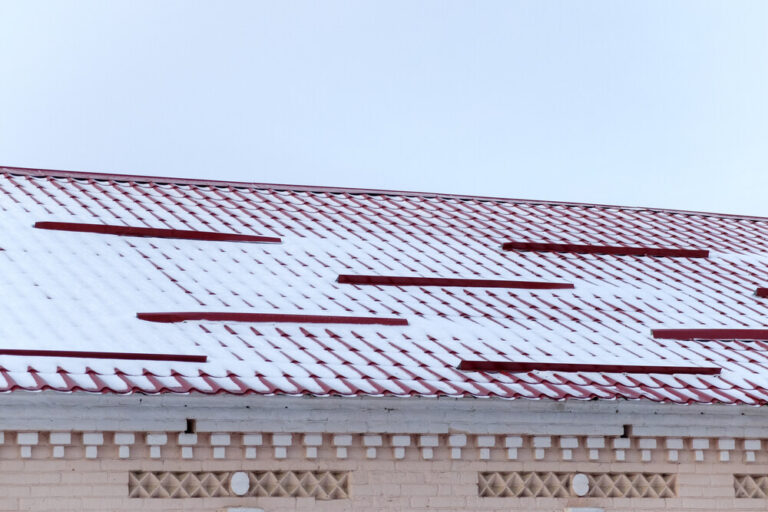
Start the first row roughly a foot up from the eave and stagger the pattern across every panel flat. Slide speed stays low at this range, so a 20 to 25 foot vertical gap between rows is common practice on roofs under a 45 PSF ground snow load.
3/12 to 6/12 Pitch Spacing
Moderate slopes need rows brought in closer, typically every 15 to 20 feet, since snow starts building real velocity between rows once the angle picks up.
7/12 and Steeper Spacing
Steep roofs call for the tightest spacing, sometimes under 10 feet between rows in heavy snow zones. A slab moving down this pitch reaches damaging speed quickly if it gets too much open run.
How Ground Snow Load Shifts These Numbers
The 45 PSF figure used in most standard spacing charts works only as a baseline. Regions carrying a higher design snow load under local building code, sometimes well over 100 PSF in mountain climates, need tighter spacing than that baseline shows. This is where a licensed engineer or a manufacturer’s technical team earns their fee, turning a local code requirement into an exact row count rather than a guess pulled from a generic table.
Narrow vs. Wide Panel Valleys on Low Pitch Need Different Spacing
Exposed-fastener panels with ribs or valleys add a wrinkle that low-slope installers need to plan around. A valley under roughly 16 inches wide typically needs just one guard centered in it per row. Wider valleys, 17 inches and up, often call for two guards side by side to control the wider channel of snow moving through that section. Skip this detail on a low-pitch corrugated or ribbed panel and gaps in coverage can show up even when the row spacing looks correct on paper.
Best Snow Guard Types for Low-Pitch Metal Roofs
Panel profile decides which snow guard style will actually hold, often before pitch even enters the conversation. Get the profile match wrong and even a perfectly spaced layout won’t perform as it should, so it’s worth walking through where each hardware type fits.
Pad-Style Screw-Down Guards for Exposed-Fastener Panels
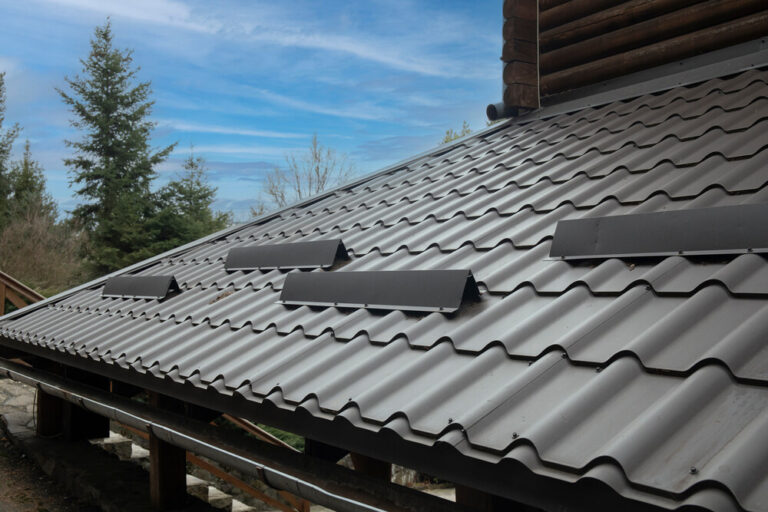
A screw-down pad guard anchored directly into solid decking or purlins is usually the right call for a roof using an exposed-fastener panel like corrugated or ribbed steel. Supply Maverick’s Snow Defender ST-series pad guards are built for exactly this application, offering a low-profile option that still holds up under a full winter’s load.
Clamp-On Guards for Standing Seam Panels
Standing seam roofs shouldn’t be drilled for snow retention, since every penetration becomes a future leak risk. Clamp-on guards grip the seam mechanically and solve this without touching the panel surface. Our Snow Defender CS-series clamp guards fit standard seam heights without fasteners through the metal.
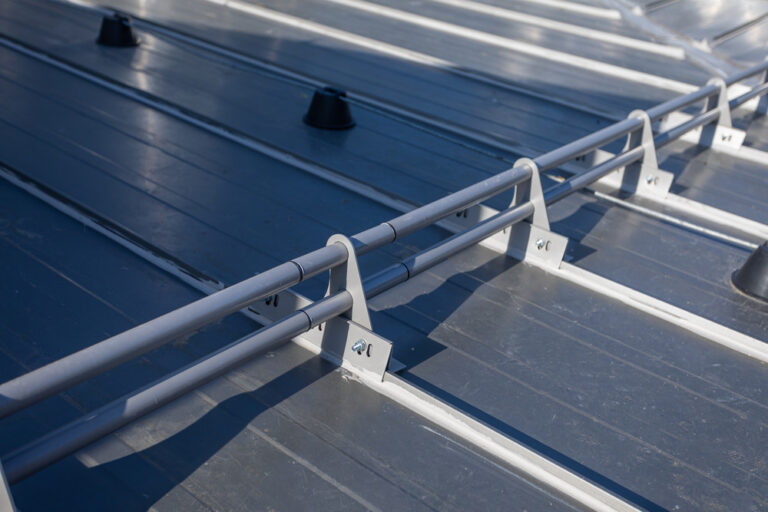
Continuous Bar-Style Rails for Long Low-Slope Runs
Installing a long run of individual guards on a low-pitch commercial roof means a lot of hardware and labor. A continuous rail system spreads that same load across the full width of the roof through fewer total installation points. Our Snow Defender bar rail line handles this kind of application well, particularly where a roof feeds directly onto an entrance or loading area below.
Why Adhesive-Only Guards Underperform Even on Low Pitch
It’s tempting to reach for a peel-and-stick guard on a low-pitch roof, since the lower slide force feels like it should be gentler on the bond. In practice, adhesive-only attachments, including specialty neutral-curing silicone, tend to fail within a winter or two, even when applied under ideal curing conditions. Mechanical attachment through screws or seam clamps is still the only method that holds up season after season, no matter the pitch.
Other Factors That Affect Whether Snow Guards Will Work on Your Roof
Pitch sets the baseline for any snow retention plan, but it’s rarely the only variable in play. A handful of site-specific conditions can push a roof toward more coverage than a standard chart suggests, or occasionally less.
Ground Snow Load and Local Building Code
The local code-mandated ground snow load, expressed in PSF, is the single biggest input into how many rows and guards a roof needs. A roof in a 20 PSF zone and one in a 90 PSF zone need very different plans, even at identical pitch.
Eave-to-Ridge Roof Length
A short eave-to-ridge run might only need one or two rows regardless of pitch. A long run gives snow more distance to build speed and weight before reaching the bottom edge, which usually calls for adding intermediate rows rather than relying on spacing alone.
Panel Profile and Substrate
Whether panels sit on solid decking or get fastened over purlins changes what a guard can anchor into. Purlin-mounted panels need each guard fastened directly over an actual purlin location, since a guard floating between purlins has nothing solid to grip and the attachment point simply won’t hold.
Sun Exposure and Freeze-Thaw Cycling
A south-facing low-pitch roof in a climate with frequent above-freezing afternoons sees more freeze-thaw cycling than a shaded north-facing slope does. That repeated pattern is exactly what triggers sudden slab release, so sun-exposed roofs in these climates often warrant a denser guard pattern than the baseline chart suggests.
Liability and Safety Near Entryways and Walkways
There’s a safety angle here beyond property damage. Sliding snow off any roof, low pitch included, creates real injury risk for anyone standing below, and commercial property owners can carry genuine liability exposure if a walkway, parking area, or entrance sits under an unprotected edge. Treat this as a safety plan as much as a maintenance decision, because that’s what it is.
Common Mistakes That Make Snow Guards Fail on Low-Slope Metal Roofs
A well-chosen guard system can still underperform when the layout is wrong, and low-slope roofs seem to attract a few specific mistakes more than others. Here are the ones to watch out for.
Installing a Single Row Along the Eave Only
A single row at the bottom edge is rarely enough coverage on a roof of any real length. It puts the full weight of every slab above it onto one line of hardware, and that load concentration is something most systems aren’t rated to handle over time.
Isolating Guards Over Doors or Walkways
Placing guards only above a doorway or path, and leaving the rest of the roof bare, sounds efficient but backfires in practice. Snow still slides freely on the unprotected sections and can push sideways into the protected zone, overloading it from an angle the system was never designed for.
Skipping Load Calculations in Heavy Snow Zones
Eyeballing a spacing pattern from a generic chart works fine in a moderate climate. In a region carrying a heavy design snow load, skipping an actual engineering calculation is how roofs end up with guards that look correctly placed but were never rated for the load they’re now holding.
Low-Pitch vs. Steep-Slope Metal Roofs Compared Side by Side
Set a low-pitch roof next to a steep one and the core function of a snow guard stays identical, though the engineering underneath it shifts quite a bit.
Slide Speed and Impact Force by Slope
Low-pitch roofs generate slower, lower-force slides. Steep roofs generate faster slides that hit the lowest row with considerably more energy.
Row Spacing and Count Differences
A low-pitch roof typically runs wider gaps between rows, sometimes 20 feet or more. A steep roof needs those same rows closer together, occasionally under 10 feet in heavy snow regions, even when the total roof area is smaller.
Recommended System by Slope Range
Pad-style and clamp-on guards handle both ends of this range well. Continuous bar rails are best saved for long, low-pitch commercial runs, where reducing installation points matters, rather than steep residential slopes where individual guards blend into the roofline better anyway.
How to Choose the Right Snow Retention System for Your Slope
Pitch and panel type usually determine the hardware category, while ground snow load determines how much a roof actually needs. Once those pieces are in place, the decision usually narrows fast.
Matching Guard Type to Your Panel Profile
Standing seam calls for clamp-on hardware. Exposed-fastener panels call for screw-down pads instead. Long runs on either profile can move to a continuous rail once the unit count climbs into the hundreds.
When a Snow Rail Makes More Sense Than Individual Guards
A rail system can be the better call even on a low-slope roof once a wide commercial span or a walkway-facing edge is involved, since it removes the risk of a gap opening up between individual units.
Cost Differences Between Snow Guards and Snow Rails
Individual pad or clamp guards generally cost less per unit than a continuous rail system, since rails use more material and typically take longer to install. For a contractor buying in volume, Supply Maverick’s wholesale pricing tiers narrow that gap considerably on larger orders.
Final Thoughts
Pitch changes the engineering behind snow retention while leaving the basic outcome the same. A low-pitch metal roof holds snow longer before release, which usually means wider row spacing and, on certain panel profiles, a valley-specific layout. A steep roof needs the opposite: tighter rows built for faster, harder-hitting slides. Dial in the panel profile, ground snow load, and pitch, and a properly spaced system works just as well at 2/12 as it does at 8/12.
Supply Maverick keeps the full Snow Defender lineup in stock. That includes pad-style and clamp-on guards for individual applications, plus continuous bar rails for longer commercial runs, and most orders placed before 12 p.m. EST ship out that same day. Contractors ordering full-roof quantities can take advantage of wholesale pricing and Net 30 account terms, and as the e-commerce division of Mid-Michigan Metal Sales, we ship these same manufacturer-backed components across the U.S., Canada, Australia, and New Zealand. If you’re unsure which Snow Defender system fits a specific pitch and panel type, reach out to our team with your roof details, and we’ll help narrow it down.
Frequently Asked Questions
Do snow guards work on a 1/12 pitch metal roof?
Yes. A 1/12 pitch just means slower-moving snow, which usually allows wider spacing between rows than a steeper roof would need.
Can you install too many snow guards on a low-slope roof?
Overbuilding coverage is rarely a functional problem, though it adds unnecessary cost. Uneven spacing or gaps in coverage cause far more trouble than raw guard count ever does.
Do low-pitch metal roofs need snow guards at all?
In any region with meaningful snowfall and something worth protecting below the roof edge, yes. Skipping them on a low-slope metal roof carries the same slide risk as skipping them on a steep one.
Is there a minimum pitch requirement for snow guards?
Not really, as long as the roof is steep enough for the panel manufacturer to consider it installable. Below roughly 1/4/12, the roof starts functioning like a flat roof, and snow retention hardware stops being the right tool.
Snow guards vs. snow rails: which is better for low-slope roofs?
Individual guards work well on most low-pitch residential and light commercial applications. Rails make more sense on long commercial runs, or anywhere a continuous barrier reduces risk more reliably than staggered units.