Snow Guards vs. Snow Fences for Metal Roofs: Which System Is Right?
Key Takeaways
- Snow guards are individual, spaced-out devices that break a snow load into smaller sections; snow fences are continuous barriers that run the length of the eave.
- Roof pitch and expected snow load determine how much retention your roof actually needs. Some low-slope roofs don’t need any at all.
- Panel type matters as much as system type. Standing seam roofs typically call for clamp-on hardware, while exposed fastener panels use screw-down guards.
- Snow fences generally cost more per linear foot, but a guard system with three or four rows can add up to a similar total on a long roof plane.
- Material choice affects how long either system lasts. Aluminum, stainless steel, painted steel, and copper all hold up differently under repeated freeze-thaw cycles.
- Larger or long roof planes sometimes require using both systems together.
Winter creates a real problem for anyone with a metal roof: snow builds up, then lets go all at once. A metal panel doesn’t grip snow the way asphalt shingles do, so a rooftop avalanche can strip gutters, crush a parked car, or send someone to the hospital before anyone sees it coming. Two hardware categories solve this: snow guards Supply Maverick and snow fences, and the right choice depends on your roof, not just your budget.
This guide breaks down what separates the two, how roof pitch and panel type should drive your decision, and where each system actually earns its cost.
What Actually Separates a Snow Guard From a Snow Fence
Homeowners researching this topic usually run into three or four different terms for what sounds like the same thing. Snow rail, snow brake, snow guard, and snow retention system: marketing copy uses these interchangeably, and that overlap is part of why the comparison feels confusing before you even get to which one fits your roof. The two categories work differently enough that sorting out the distinction is worth doing before you compare pricing or specs.
Snow Guards Are Individual Spaced-Out Devices
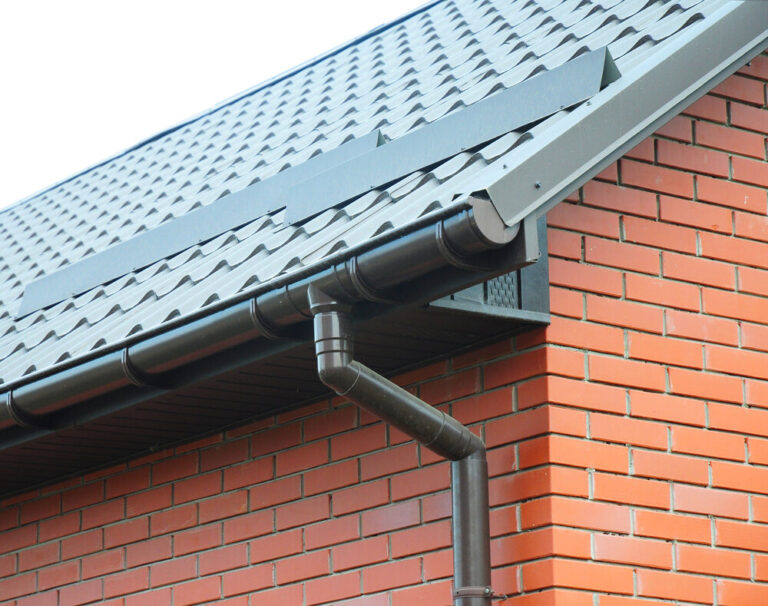
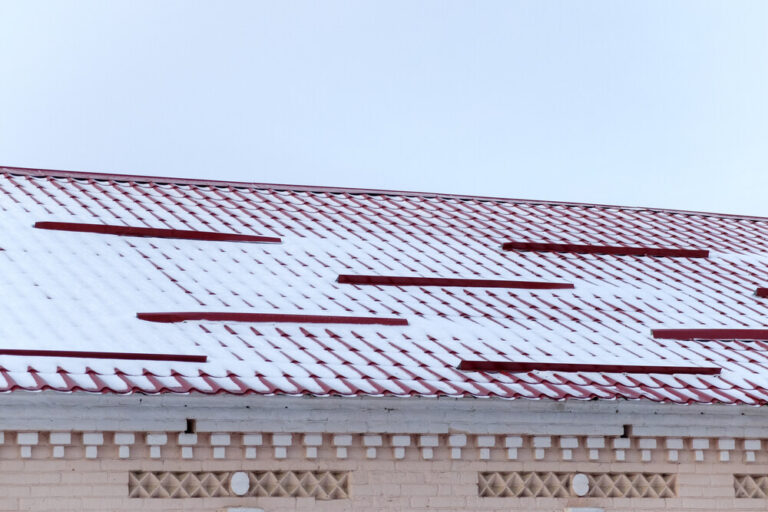
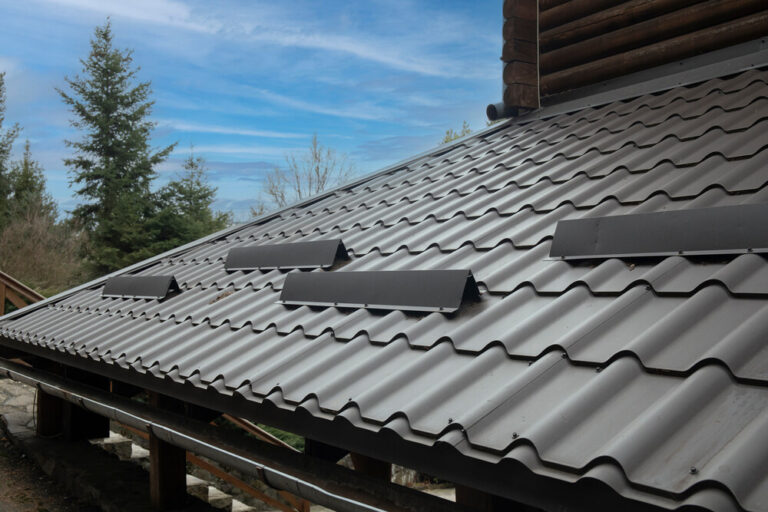
A snow guard is a small unit fastened to the roof surface in a repeating pattern, usually staggered across multiple rows near the eave. Pad-style guards sit low and interrupt snow close to the panel surface. Bar-style guards run a short horizontal length and catch more surface area per unit. Our Snow Defender line falls into this category and is often specified because it pairs with existing clamp systems instead of requiring new roof penetrations.
Materials vary quite a bit here. Aluminum keeps cost down and resists corrosion well. Heavier, wetter snow loads tend to favor stainless steel instead. Painted steel matches the roof color for a cleaner look, while copper develops a patina over time and is mostly recommended for historic or high-end builds.
Snow Fences Run the Length of the Eave
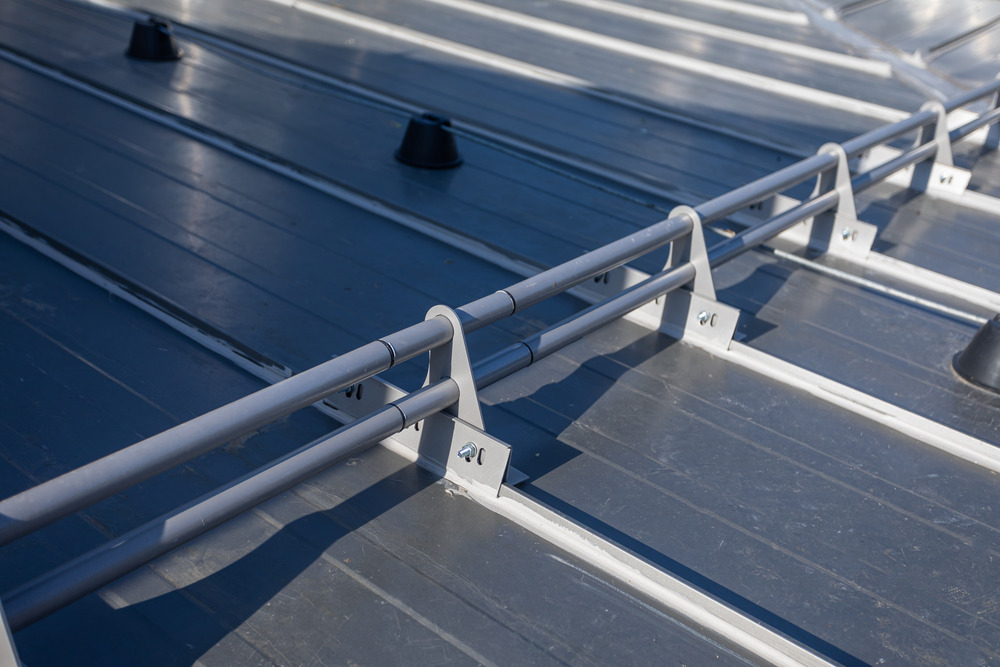
A snow fence (sometimes marketed as a snow rail or snow brake) mounts as one continuous barrier instead of a spaced pattern. Vertical tubes or a mesh panel form the actual barrier. Because the whole system spans the roof width in one piece, it holds back a much larger volume of snow before anything releases.
That extra capacity comes with tradeoffs. A fence system sits higher off the roof surface than most guards, so it’s more visible from the ground. It also costs more per linear foot in most cases, a point worth remembering before the cost breakdown below.
Where the Naming Gets Blurry
You’ll often find “snow rail” used for what’s functionally a fence system, and “snow guard” used loosely enough to cover both categories. For the purposes of this guide, snow guard means an individual spaced unit and snow fence means a continuous eave-length barrier. If a product listing calls itself a rail or a brake, check whether the design is spaced or continuous before assuming which category it falls into.
How to Decide Which System Your Roof Needs
Picking between a guard system and a fence system comes down to a handful of concrete details, not personal preference alone. Roof pitch, panel type, what sits below the eave, and how visible you want the hardware to be all point toward different answers. Working through each one in order gets you to a choice that fits your specific building instead of a generic pick.
Roof Pitch and Snow Load
Steeper roofs shed snow faster, so they generally need either a fence system or multiple rows of guards to hold the same load a single row would manage on a shallower pitch. The underlying math isn’t complicated. Engineers take the roof’s snow load, factor in the roof angle, then multiply by the roof dimensions to get an angular force figure. That number is divided by a guard’s tested load rating to determine how many rows are needed.
Low-slope roofs are the exception most guides skip. Roofs pitched under 3:12 often don’t need snow retention hardware at all, since snow tends to melt in place rather than slide as a sheet. Skipping this step on a low-slope roof simply matches the hardware to how snow actually behaves there.
Geography plays into this too. Customers in heavy snowbelt states and mountain regions typically need more rows or a fence system by default, and the same logic applies to our customers across the border in Canada, where winter loads run just as demanding.
Standing Seam vs. Exposed Fastener Panels
The roof panel itself decides which mounting method is an option. Standing seam roofs use clamp-on hardware that grips the raised seam without a single screw or drilled hole, which keeps the water-shedding surface intact. Exposed fastener panels don’t have a seam to clamp onto, so guards get screwed directly through the panel with a sealed fastener instead.
Mixing these up causes real problems. A clamp built for a standing seam won’t grip a flat exposed fastener panel, and drilling unnecessary holes into a standing seam panel creates a leak point that never had to exist. Confirm panel profile before you order hardware.
What You’re Actually Protecting
Every roof has a few spots below the eave that matter more than others. A few examples are worth mapping out before you order.
- Walkways and entry doors people use daily
- Driveways and parking areas where a vehicle sits under the eave
- Heating, ventilation, and air conditioning (HVAC) equipment or meters mounted below the roofline
- Property lines shared with a neighbor or a public sidewalk
A roof with none of these below the eave line might tolerate a lighter system than one with a front door sitting directly underneath it.
Look and Finish Preferences
Guards sit low and blend into the roofline, which is why most homeowners who care about curb appeal lean toward them. Fence systems are more visible by design, though some buyers prefer that. An obviously substantial barrier reads as more protection to people walking underneath, even when a well-spec’d guard system performs just as well.
Color-matched channel-style guards are a recognizable category in this market. A painted metal strip slides into a mounting channel so the hardware disappears against the roof color instead of standing out as bare metal. If you’re trying to match an unusual roof finish, reach out to our team directly rather than relying on general product page notes, since finish availability varies by run.
Material Options and Durability
Most comparisons stop at guard versus fence and skip what the hardware is actually made of, and that detail is especially important once you’re a few winters into ownership. Material choice affects how long the hardware survives freeze-thaw cycles, plus what it costs upfront. It also determines whether the guards blend into your roof color or stand out against it.
Metal Materials and How They Hold Up
Aluminum resists corrosion on its own and keeps weight down, making it a common default across both guard and fence styles. Stainless steel costs more upfront, yet it shrugs off heavy, wet snow loads better than aluminum does over repeated seasons. Painted steel is recommended when color-matching the roof panel ranks above raw material performance. Copper shows up mostly on higher-end or historic projects, where the visual patina it develops over time is the point rather than a drawback.
Budget Plastic Trade-Offs
Plastic guards show up at a lower price point, and for a light-snow climate with minimal load, that might cover the need just fine. Repeated freeze-thaw cycles are hard on plastic, though, and a cracked guard needs full replacement rather than a repair. A metal system costs more per unit but avoids that replacement cycle, and buying through wholesale pricing tiers often narrows the upfront cost gap more than buyers expect.
Comparing Snow Guard and Snow Fence Costs
Cost is where many buyers land on a decision, and that’s fair since snow retention hardware is a real expense either way. The actual total depends less on which category you pick and more on how many rows or how much linear footage your roof needs. Breaking the math down by unit cost first, then by total job cost, makes the comparison clearer up front.
Material and Per-Unit Cost
Pad-style guards sit at the budget-friendly end of the category, since each unit is small and uses less material. Bar-style guards cost more per piece but cover more linear roof area per unit. Fence systems sit at the top of the per-linear-foot range because the entire barrier ships as one continuous unit rather than a series of individually fastened pieces.
How Row Count Changes the Total
Here’s the detail most cost comparisons miss. A roof needing three or four rows of guards can end up costing close to what a single fence run would, once you add materials and fasteners across every row. Longer roof planes and heavier snow loads often push that math toward the fence system either way. Ordering guards across multiple rows, or outfitting more than one property? Ask about bulk quantity discounts and wholesale pricing tiers before finalizing a quote. The savings on a multi-row order add up fast.
Installation and Placement Basics
Installation is where the roof details covered above come together into an actual layout on your roof. None of this replaces a proper site-specific plan, but knowing the basics helps you ask the right questions before a crew shows up. The two things that matter most are where the first row sits and how the hardware attaches to your specific panel.
Typical Row Placement Near the Eave
Installers commonly set the first row within about 12 inches of the eave edge. Snow compacts most heavily at the base of the roof, which is why the first line of defense needs to sit there. Additional rows get staggered further up the roof plane on longer runs or steeper pitches, spaced according to the load each row is rated to hold.
Treat this as orientation-level information, not a substitute for a job-specific layout. Roof length, pitch, snow load, and wind exposure all shift the right spacing for a given building, and a qualified local installer should run those numbers before anything gets fastened down.
Why Panel-Specific Mounting Still Matters Here
The clamp-versus-screw distinction from earlier carries straight into installation. A clamp-on system needs a seam to grip, while a screw-down system needs a properly sealed penetration point. Bring in a qualified local installer for the actual attachment and load calculations. Supply Maverick supplies the hardware; on-roof installation isn’t something we handle, and matching the right installer to your panel type counts for just as much as matching the right guard.
Can You Combine Both Systems?
Yes, and larger commercial roofs often do. A fence system along the eave handles most of the load, while additional guard rows higher up the roof plane manage snow before it reaches the fence line. Long residential roof planes with heavy snow exposure sometimes call for the same combination. Neither system locks you into an either-or choice once roof size or snow load pushes past what one category handles comfortably on its own.
Matching the System to the Job
Here’s roughly how the decision breaks down by climate and roof type. None of these categories are hard rules, since two roofs in the same city can carry different loads depending on orientation and nearby tree cover. Use this as a starting point, then confirm the specifics with a job-specific layout before you order.
- Light-snow climate, moderate pitch: a single row of pad-style or bar-style guards usually covers it.
- Moderate snow load, steeper pitch: multiple guard rows or a lighter fence system, depending on what sits below the eave.
- Heavy snowbelt or mountain region: a fence system, often paired with additional guard rows on longer roof planes.
- Commercial or long roof plane: a combined system, engineered around a job-specific layout rather than a one-size answer.
Supply Maverick stocks hardware across both categories, and most orders placed before 12 p.m. EST ship the same day, so jobs waiting on parts don’t stay stuck for long. As the e-commerce division of Mid-Michigan Metal Sales, we get manufacturing-level detail on how this hardware performs in the field, and that perspective shapes every recommendation in this guide.
Get the Right Snow Retention Hardware Fast
Whichever system fits your roof, having the specific hardware on hand beats waiting weeks for a backordered part mid-winter. Supply Maverick carries in-stock guards and fence-style hardware for both standing seam and exposed fastener roofs, and we ship most orders placed before 12 p.m. EST the same day. Contractors working job accounts can also set up a Net 30 account for easier ordering across multiple projects, and we ship to customers across the US, Canada, Australia, and New Zealand.
Browse our snow guard and snow retention hardware to find the right match for your panel type and snow load.
Frequently Asked Questions
Do metal roofs need snow guards or snow fences at all?
Not every metal roof does. Roofs pitched under 3:12 typically shed snow gradually rather than in sheets, so retention hardware often isn’t necessary. Anything steeper, especially with people or vehicles regularly below the eave, benefits from at least a basic guard system.
Can I add snow guards to a roof that’s already installed?
Yes. Clamp-on systems for standing seam roofs attach without new penetrations, and screw-down guards can go onto existing exposed fastener panels with a properly sealed fastener. Retrofitting is common and doesn’t require replacing panels.
How many rows of guards do I need?
It depends on your snow load, roof pitch, roof length, and the tested load rating of the specific guard you choose. A qualified installer can run the calculation for your roof. Generally speaking, steeper pitches and heavier loads call for more rows.
Do snow fences work on standing seam roofs?
Yes, when the fence system uses seam-specific clamps rated for your panel profile. Confirm the clamp is engineered for your exact seam type before ordering, since fit varies across standing seam profiles.
Will installing snow guards affect my roof warranty?
It depends on the panel manufacturer and mounting method. Clamp-on systems that don’t penetrate the panel typically carry lower warranty risk than screw-down systems do. Check your specific roof warranty terms, or ask your installer to confirm before drilling anything.