Metal Roofing Fasteners: The Complete Buyer’s Guide
Key Takeaways
- Match the fastener to both the panel system and the substrate. Use coarse-thread, self-piercing screws for wood and self-drilling Tek points for steel. Head style and washer type must fit your panel profile and exposure.
- Choose EPDM sealing washers over neoprene. EPDM resists UV and stays flexible for decades, while neoprene often dries out and cracks in about 10 years.
- When replacing failed screws, follow the “size up” rule. Don’t swap a #10 for another #10; step to #12 or #14 to engage fresh fibers and restore holding power.
- Placement, spacing, and drive depth are make-or-break details. Follow manufacturer instructions and local codes, with tighter patterns at eaves, ridges, and corners because of wind uplift.
Fasteners take up a tiny slice of a metal roof budget, yet they’re behind many leaks, callbacks, and early failures. Screws and specialty fasteners often total well under 1% of the project cost, but the wrong choice — or the right screw installed poorly — can snowball into trouble. The path to a dry, long-lasting roof isn’t complicated. Learn how fasteners work, match them to your panel system and substrate, factor in site conditions, and install them with care. Do that, and you set yourself up for decades of dependable performance.
At Supply Maverick, we sweat the details. As the e-commerce arm of Mid-Michigan Metal Sales, you get manufacturer-informed guidance from people who build and ship these components every day. Need fasteners fast? Most orders placed before 12 noon EST ship the same day, and we support customers across the US, Canada, Australia, and New Zealand. Whether you’re scheduling a crew or tackling weekend work, use this guide to zero in on the right metal roofing fasteners, from anatomy and materials to installation, refastening, and smart buying tips.
Understanding Metal Roofing Fastener Anatomy
Every spec on a fastener is important. Once you understand diameter, length, thread type, head style, and washer material, you’ll be able to avoid common mistakes and pick a screw that lasts as long as your panels.
Diameter and Length
Diameter (often shown as screw gauge) drives holding power. Common roofing diameters are #8, #9, #10, #12, and #14. Larger numbers mean a thicker shank and higher pull-out strength. For structural attachment of exposed-fastener panels into wood purlins or framing, #10 and #12 are common; for replacements or high-wind assemblies, #12 or #14 add extra bite.
Length is just as relevant: Aim for at least 3/4″ to 1″ of penetration into solid wood after accounting for panel thickness and any underlayment or furring. If the screw is too short, it won’t engage enough fibers to resist uplift; too long, and you can induce jacking, stress the substrate, and increase the chance of driving at an angle. For trim or sheet-to-sheet sidelaps, shorter lengths (3/4″ to 7/8″) are typical.
Thread Pitch (TPI)
Threads are engineered for the substrate. Threads per inch (TPI) vary to suit different materials:
- Coarse threads bite into wood fibers and hold under cyclical loading. These are the go-to for metal-to-wood roofing screws with Type 17 points.
- Fine threads are designed to tap into steel. Self-drilling (Tek) points create a pilot, and the fine thread follows to form a tight fit without stripping.
Don’t mix them up. A coarse-thread wood screw in steel can strip almost immediately. A fine-thread metal screw in wood won’t get adequate bite and tends to back out over time.
Head Styles
Head style affects weather-tightness, appearance, and clearance:
- Hex washer heads are standard for exposed-fastener systems such as corrugated, R-panel, and PBR. The integral washer platform spreads load and compresses the sealing washer evenly for a repeatable seal, and they’re quick to drive accurately.
- Pancake heads (often called XLP, short for extra-low-profile) are used where clearance is an issue or where fasteners are concealed, such as standing seam clip attachment, trim hem fastening, or under rib covers. The slim profile prevents telegraphing through panels and won’t snag adjacent materials or clips.
Sealing Washers: EPDM vs. Neoprene
The bonded sealing washer often decides whether a fastener stays watertight for decades or fails after a few seasons. Ethylene propylene diene monomer (EPDM) is the metal roofing standard because it resists UV, stays elastic, and weathers well. Neoprene tends to harden and crack under sunlight (often around the 10-year mark), while EPDM remains flexible and sealed far longer.
For exposed-fastener systems, choose fasteners with EPDM-bonded washers. On better lines, a zinc or metal alloy cap on the head also shields the EPDM from sunlight and extends service life.
Types of Metal Roofing Fasteners
Different panel systems and substrates call for different fasteners. Use the guide below to match the right type to the job, and consider specialty options when a standard screw won’t solve a field challenge.
Metal-to-Wood Roofing Screws
These are the workhorses for exposed-fastener panels installed over wood framing or purlins.
Typical features include:
- A Type 17 (self-piercing) point that cuts its own pilot into wood, reducing splitting and eliminating pre-drilling in most cases.
- Coarse, deep threads to maximize holding power in softwoods and hardwoods.
- An integral hex washer head with an EPDM-bonded sealing washer for a tight, reliable seal.
- Painted heads available to blend with common panel colors for a clean finish.
Typical applications include attaching corrugated, 5V, R-panel, and PBR panels to wood decks, nailers, or purlins, and fastening trims like eave and rake where an exposed fastener is standard.
Example product applications you’ll find at Supply Maverick:
- Fastgrip #10 Hi-Lo MINI-DRILLER EPDM Washered Metal Roofing/Siding Fasteners: A dependable choice for 29- to 26-gauge steel panels over wood, available in multiple colors.
- #11 PG Hi-Lo EPDM Washered Metal Roofing/Siding Fasteners: For coastal or corrosive environments where carbon steel isn’t enough.
Match length so the screw penetrates your wood substrate by at least 3/4″ to 1″ after panel thickness. For example, a 29-gauge panel over 1×4 strapping often pairs with 1-1/2″ to 1-5/8″ screws, depending on lap and profile.
Metal-to-Metal Roofing Screws (Self-Drilling / Tek)
For steel purlins, structural members, or thicker sheet steel, choose a self-drilling (Tek) screw. A forged drill point creates the hole, and a fine thread taps tightly into the metal. Tek points are numbered by drilling capacity. Higher numbers handle thicker steel.
- Tek #1-2: Light-gauge steel sheets and thin members
- Tek #3-#4: Heavier purlins and thicker substrates
- Tek #5: Structural steel and multi-layer assemblies
Select a Tek point that can drill through your thickest layer with a margin. If the point is undersized, tips can burn or fail to drill through. Oversizing can lead to stripped threads.
Example product applications at Supply Maverick:
- #12 MetalGrip T5 Self-Drilling Screw with EPDM Washer: A heavy-duty option for attaching panels or trims to structural steel where a Tek #5 is required. Well-suited for synthetic underlay-to-steel and structural intersections. Not for PVC membranes or soft plastics.
- #10 Pancake Screws Zinc Plated Self Drilling: Ideal for standing seam clip attachment to steel purlins where a low-profile head is concealed.
- #12 MetalGrip Self Drilling Roofing/Siding Fasteners (Steel to Steel): For inland corrosive sites needing metal-to-metal attachment plus corrosion resistance.
Stitch Screws (Lap Screws)
Stitch screws (also called lap or zip screws) are short, self-piercing fasteners that secure panel sidelaps and metal-to-metal overlaps. They aren’t structural; they prevent wind-driven separation at seams and help control water. Common features include:
- Short lengths (typically 3/4″ to 7/8″) for sheet-to-sheet fastening without penetrating the substrate below.
- Hex washer heads with EPDM-bonded washers for a weather-tight seal at sidelaps and trim laps.
- A head design that maximizes grip and helps prevent driver slip during installation.
Skipping sidelap fastening is a frequent cause of panel flutter, noise, and seam leaks in high winds. Follow panel manufacturer patterns (usually closer spacing at eaves and corners) and don’t substitute longer structural screws where a lap screw is specified.
Example product applications at Supply Maverick:
- #12 MetalGrip Self Drilling Roofing/Siding Fasteners (Steel to Steel): A reliable pick for lapping R-panel/PBR sidelaps and hem-to-hem metal overlaps.
- #10 ProCap Stainless Steel Cap Metal to Wood EPDM Washered Fasteners: Use in coastal areas or ammonia-rich environments (for example, agricultural buildings) to keep laps tight without corrosion staining.
Specialty and Hard-to-Find Fasteners
Field conditions rarely follow a neat template. That’s why we stock specialty and repair fasteners that solve specific problems:
- Oversized replacement screws for wallowed-out holes during re-roofing
- Color-matched, large-OD EPDM washers to cover elongated slots at old fastener locations
- Stainless or marine-grade (316) screws for aluminum panel systems or salt spray zones
- Low-profile pancake head screws for concealed trim fastening
- Fasteners designed for snow guards and accessory attachment that align with engineering requirements
Example product applications at Supply Maverick:
- #14 FastGrip Replacement Metal Roofing/Siding EPDM Washered Screws: Built for refastening over-enlarged holes in panels and siding, with a larger shank and a durable EPDM sealing washer.
- #43 Full Stainless Steel Rivets Painted & Mill Finish: For trim terminations, ridge cap closures, and accessory attachment when a rivet is specified and you want a clean, color-consistent finish.
Exposed vs. Concealed Fastener Systems
Your panel system dictates your fastener approach. Exposed-fastener systems require visible, washered hex-head screws to seal each attachment point. Concealed-fastener systems hide fasteners behind clips or hems, reducing penetrations through the panel surface and allowing panels to move with thermal expansion.
Fasteners for Exposed Systems
For corrugated, R-panel, and PBR systems, the standard is a hex washer head screw with an EPDM-bonded sealing washer. These screws are driven through the panel into framing, with the head and washer visible after installation. Higher-end versions feature zinc alloy or metal caps that protect the EPDM from UV, helping the seal last as long as the panel finish.
Best practices include:
- Fasten in the flat (pan) next to the rib (not through the rib) to avoid voids that shift under load and compromise the seal.
- Use color-matched painted heads to blend with panels and trims.
- Choose stainless fasteners in corrosive or coastal applications, and match fastener material to panel material to reduce galvanic risk.
Example product applications at Supply Maverick:
- #14 FastGrip Replacement Metal Roofing/Siding EPDM Washered Screws: A proven solution for re-roofing jobs where you need to step up in size to grip fresh wood around old wallowed-out holes.
- #12 TuffGrip Metal to OSB EPDM Washered Fasteners: Move to #12 for higher pull-out values or for refastening where #10 holes have enlarged.
- #10 ProCap Stainless Steel Cap Metal to Wood EPDM Washered Fasteners: For exposed systems where staining and long-term corrosion resistance matter.
Fasteners for Concealed Systems
Standing seam and other concealed-fastener panels use clips or hidden hems secured to the deck or purlins. The fastener is typically a low-profile pancake head screw so it won’t telegraph through the panel or interfere with clip movement. Concealed systems allow panels to expand and contract with temperature swings, which reduces stress on fasteners and the chance of backout over time.
For steel purlins, a self-drilling pancake head (#10-16 or #12-14) is common. For wood sheathing or nailers, use a self-piercing pancake head with a wood thread. Trim hems, Z-closures, and accessory clips also benefit from low-profile heads to maintain tight fits.
Example product applications at Supply Maverick.
- FrameGrip™ Structural Wood Screws: For concealed fastening of trims and closures into wood decks without telegraphing through the finished surface.
- #10 Pancake Screws Stainless Steel: A smart upgrade in inland corrosive environments or where bi-metal contact is a concern.
Material and Coating Selection for Longevity
Your fasteners should match the service life of your panels. That means choosing the right core material and finishes for your environment and substrate. The wrong combination can rust, stain, or trigger dissimilar-metal corrosion that shortens roof life.
Galvanized and Zinc-Plated Carbon Steel
For most inland applications, quality carbon steel fasteners with dependable corrosion protection are standard. Look for a combination of:
- Mechanical galvanizing or high-grade zinc plating for base protection
- A painted head that matches your panel color and adds another layer of corrosion resistance
- A properly bonded EPDM washer that seals and stays flexible
These choices offer solid value and long service life away from salt spray or aggressive chemical exposure. Choose reputable lines with consistent coatings; bargain screws with thin plating can pit and rust early.
Stainless Steel (304 and 316 Grade)
Where corrosion risk is higher, upgrade to stainless. Two common grades include:
- 304 stainless (18-8): A proven general-purpose stainless that resists rust staining and pitting in most inland conditions. Good for agricultural buildings with moderate ammonia and for areas with frequent condensation or washdowns.
- 316 stainless (marine-grade): Contains molybdenum for superior resistance to chlorides. Use this in coastal zones, salt spray exposure, harsh chemical environments, and for aluminum panels where galvanic corrosion is a risk with carbon steel.
Drive stainless at moderate speeds to prevent galling. Use a clutch-equipped screw gun and stay within the recommended RPM range.
The Danger of Galvanic Corrosion
Dissimilar metals in electrical contact, plus moisture, create galvanic corrosion, in which the less noble metal sacrifices itself first. Examples:
- Carbon steel fasteners on aluminum panels can corrode rapidly at the interface.
- Copper-based accessories with steel or aluminum, without separation, can cause local attack.
- Stainless is generally compatible with aluminum, especially 316 near coasts.
Rule of thumb: match fastener material to panel material, or choose a known compatible pairing, and isolate dissimilar metals with appropriate sealants or gaskets when needed. If you’re unsure (particularly with aluminum roofing or coastal projects), step up to 316 stainless fasteners.
Installation Best Practices: Getting It Right the First Time
Even premium fasteners can’t overcome poor installation. Most leaks and callbacks come from over-driving, under-driving, hitting the wrong spot, or spacing that doesn’t meet wind loads. Dial in these details, and you’ll save time later.
Where to Fasten: The Flat vs. The Rib
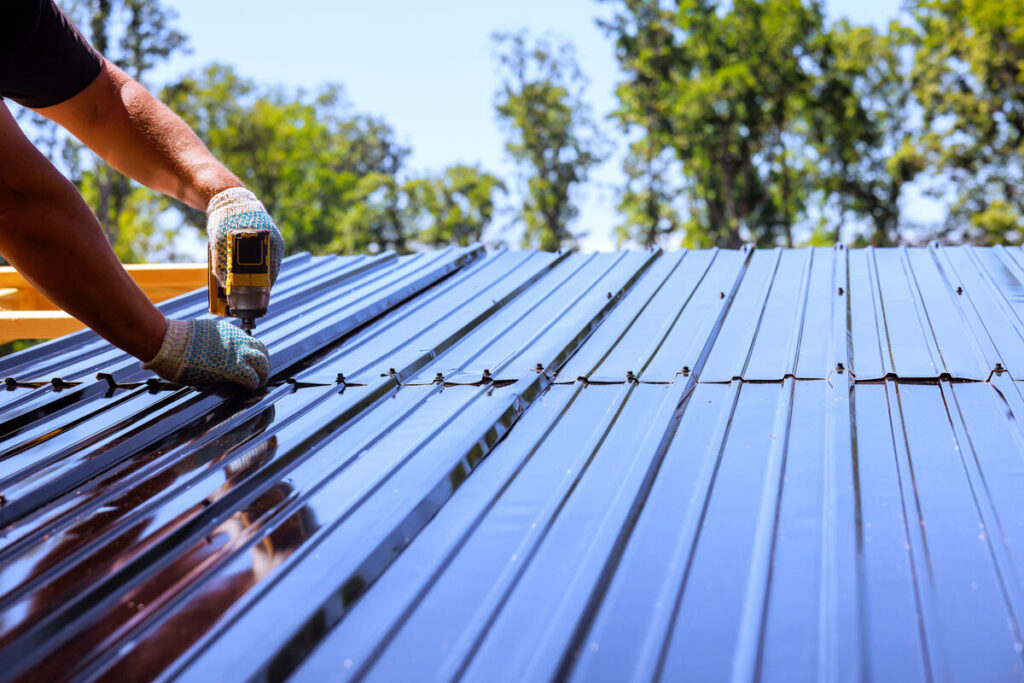
For exposed-fastener systems, place screws in the flat (pan) right next to the rib, not through the rib. Fastening in the rib creates a void under the washer, encourages rocking under wind load, and accelerates backout. In the flat, the washer compresses evenly and the load transfers directly to the substrate.
Proper Washer Compression
Aim for the “just right” zone. The EPDM washer should be snug with slight, even squeeze-out at the edges — but no mushrooming or splitting. Under-driven washers can spin and won’t seal. Over-driven screws crush the washer, dimple the metal, and create a leak path.
- Set your screw gun clutch to a light-to-medium setting and test on scrap panels until you consistently achieve slight, even washer compression.
- Watch alignment. If a screw enters at an angle, back it out and correct it; don’t try to pull it straight by over-driving.
- Inspect each row from multiple angles for consistent compression and straight lines before moving to the next run.
Fastener Spacing and Wind Uplift
Spacing depends on panel profile, substrate, building height, and wind exposure. A common baseline for many exposed systems is 24″ on center in the field, with closer spacing at eaves, ridges, and gable ends. Wind loads aren’t uniform across a roof:
- Corners and edges can see about 2.8 times the uplift loads of the field (per American Society of Civil Engineers Standard 7 [ASCE 7]). These areas often need the tightest spacing.
- High-wind zones may require patterns as tight as 3″ to 6″ on center at critical zones.
- Manufacturer-tested assemblies and local codes take precedence over general guidelines, so follow them exactly.
For sidelaps, place stitch screws per the panel manufacturer’s pattern, often every 12″ to 24″ in the field and closer near edges and corners.
Using the Right Tools
Impact drivers excel at framing but are known for over-driving roofing screws and damaging washers. Use a screw gun with a depth-sensing nosepiece or at least an adjustable clutch.
Suggested speed ranges:
- Around 2,500 RPM for wood and for steel substrates under 1/4″ thick
- Around 2,000 RPM for steel substrates 1/4″ and thicker
- 1,000 to 2,000 RPM for 304 stainless fasteners to reduce heat and galling
Keep driver sockets in good shape, use magnetic drivers for speed, and replace worn bits to maintain positive engagement.
Chalk Lines and Metal Shavings
Use blue or white chalk for layout and avoid red chalk as it can permanently stain painted finishes. Snap lines lightly and wipe them off as soon as panels are fastened.
Metal shavings (swarf) from drilling and cutting rust quickly — sometimes overnight — and stain panels. Brush them away with a soft-bristle brush as you go, paying special attention around cut edges and penetrations.
Replacing Failed Metal Roofing Fasteners
If your roof is 10 years old or more, or if it was fastened with lower-grade screws, refastening can be a cost-effective way to stop leaks without a full re-roof. Here’s how to do it right.
The “Size Up” Rule
Don’t replace a #10 with another #10 in the same hole. Once a screw has backed out, the surrounding wood fibers are often crushed or wallowed out. To restore holding power, size up. For example:
- Replace #10 with #12
- Replace #12 with #14
In many cases, stepping up one size with the proper length engages fresh fibers and tightens the seal. If the panel hole is elongated, you may also need a larger OD washer to cover the slot.
Example product application at Supply Maverick:
- #12 ReGrip Replacement Screw Metal to Wood: Purpose-built for refastening over-enlarged holes. The larger shank locks into fresh wood, and the larger, durable washer reseals the old penetration.
Using Oversized Washers
Severely stretched or slotted panel holes can let water track under the washer, even if the screw is tight. Oversized EPDM-bonded washers cover more area and compress evenly on warped or bent sheet, restoring a watertight seal without replacing the panel.
Pair oversized washers with the appropriate larger-diameter screw for best results. A standard small washer on a slotted hole won’t hold up.
Understanding Thermal Expansion
Metal panels expand in heat and contract in cold. Steel and aluminum move at different rates, and long runs can travel noticeably across seasons. That motion, plus wind loading, works fasteners back and forth. If fasteners are under-driven, over-driven, installed at an angle, or placed in ribs, the cyclic movement can turn round holes into slots and encourage backout.
Concealed-fastener systems tend to have fewer callbacks because panels can move independently of the fastener. For exposed systems, meticulous installation, correct spacing, and periodic inspection in harsh climates help keep thermal movement from turning into a leak.
Why Premium Fasteners Are Worth the Investment
Saving a few cents per screw is tempting on large jobs, but the math rarely works out. Upgrading from a budget five-cent screw to a premium 12-cent screw might add roughly $150 to the fastener line on a $10,000 roof — about 1.5% of the cost. A single callback five or 10 years later can erase those savings many times over in labor, travel, sealant, and customer goodwill.
Premium fasteners deliver:
- Thicker coatings and better plating for long-term corrosion resistance
- True EPDM sealing washers that don’t crack or crumble
- Consistent drill points and thread forms that install faster and hold tighter
- Painted heads that blend cleanly and weather with your panel finish
On a building component that literally holds your roof to the structure, the adage “buy once, cry once” applies. Choose fasteners that match the service life of your panels.
Where to Buy Hard-to-Find Metal Roofing Fasteners
If you’ve bounced between big-box stores and regional suppliers trying to find a very specific screw (right head, right color, right length, and the correct Tek point), you know the frustration. That’s the gap Supply Maverick fills.
The Supply Maverick Advantage
Here’s why contractors and DIYers rely on us when the schedule is tight and the specs are particular:
- Same-day shipping on most orders placed before 12 p.m. EST, so your crew isn’t waiting on fasteners
- A wide selection of hard-to-find metal roofing and siding fasteners, from oversized repair screws to low-profile pancake heads, stainless grades, and color-matched options
- Answers grounded in real-world assemblies and tested practices from a team that builds and ships these components every day
- Global shipping to the US, Canada, Australia, and New Zealand
- Wholesale pricing and bulk-quantity discounts that keep bids competitive
- Net 30 accounts available for qualified customers to streamline purchasing
Need more than just fasteners? We also stock the accessories that complete a weather-tight metal roof: foam closures, pipe boots, snow guards (including many models in the Snow Defender line), hand tools, and more — so you can source everything from one reliable supplier.
Putting It All Together: A Quick Selection Workflow
Use this straightforward workflow to choose the right fastener the first time.
- Identify your panel system. Is it an exposed-fastener system (corrugated, R/PBR) or a concealed-fastener system (standing seam with clips or hidden hems)?
- Confirm your substrate. Wood deck or purlins, or steel purlins/structural members? This determines thread type (coarse for wood, fine self-drilling for steel).
- Pick the head style. Hex washer head with an EPDM-bonded washer for exposed systems; pancake/low-profile for concealed clip and trim fastening.
- Choose the correct point. Type 17 (self-piercing) for wood; a Tek point matched to your total steel thickness for metal-to-metal.
- Size the screw. Select the right diameter (#9/#10 for standard, #12/#14 for high-wind, heavy-duty, or refastening) and length (ensure 3/4″ to 1″ penetration into wood or proper thread engagement in steel).
- Select the material and coating. Carbon steel with quality plating for most inland jobs; 304 stainless for elevated corrosion risk; 316 stainless for coastal, chemical, or aluminum panel applications.
- Match the appearance. Painted heads for exposed systems to blend with panels and trims. Use sealed, color-matched rivets where specified.
- Plan the pattern. Follow manufacturer instructions and code requirements for spacing, especially in corner and edge zones with higher wind loads.
Field Tips That Save Time (and Callbacks)
A few pro moves go a long way toward straight, leak-free, professional results.
- Snap light, removable lines with blue or white chalk and wipe them as you go. Red chalk stains.
- Use fresh driver bits and magnetic sockets to keep heads clean and painted finishes intact.
- Check the first few rows from the ground or a distance to verify alignment and even washer compression before continuing.
- Clear swarf immediately with a soft-bristle brush. Don’t leave it for the end of the day.
- In high-wind zones, tighten patterns at corners, eaves, and ridges as specified, as these areas carry the highest loads.
- Keep a box of oversized repair screws and larger OD EPDM washers on hand for surprises during re-roofs.
Real-World Product Use Cases and Pairings
To simplify selection, here are typical scenarios and the fastener types that usually fit best. Always verify against your specific panel manufacturer’s instructions and local codes.
Corrugated or R/PBR Panels Over Wood Purlins
Choose a hex washer head, EPDM-bonded, metal-to-wood roofing screw with a Type 17 point. Use #10 or #12 diameter depending on wind loads and re-roof conditions. Painted heads deliver a clean finish.
Common companion:
- #12 ProZ Aluminum Cap Metal to Metal EPDM Washered Fasteners: Premium attachment through panel flats offering superior UV protection for the EPDM washer.
Standing Seam Panels on Steel Purlins
Use low-profile pancake head self-drilling screws for concealed clip attachment. Select the Tek point to match total steel thickness.
Common companion:
- 304 Stainless Steel Blind Rivets: For high-strength trim terminations where specified.
Re-Roof Over Aged Panels with Wallowed Holes
Step up in diameter and consider larger OD washers to reseal elongated penetrations.
Common companion:
- #14 FastGrip Replacement Metal Roofing/Siding EPDM Washered Screws: Restores holding power and weather seal on re-roof jobs where holes are severely elongated.
Troubleshooting Common Installation Mistakes
If you’re chasing leaks or chronic issues, start with these frequent offenders:
- Over-tightened screws: Look for crushed or split washers and dimpling around heads.
- Under-driven screws: The washer spins freely and you’ll see daylight under the edge.
- Angled installation: The head sits crooked and the washer doesn’t compress evenly.
- Rib fastening: Water tracks past the washer because of voids; screws can rock and loosen.
- Wrong screw type: Wood-thread screws in steel or a Tek screw in wood both underperform.
- Neoprene washers: Brittle, cracked seals after sun exposure (swap for EPDM for best results).
- Swarf staining: Rust freckles around cut edges or penetrations from shavings left on the roof.
Note: Supply Maverick supplies materials only. For installation or complex troubleshooting, consult a qualified local installer and follow local codes
Safety and Quality Control on Fastener Jobs
A dialed-in fastener job is about more than speed; it’s about consistency and site control.
- Set up a test strip. Before you start the roof, drive a few screws in scrap to lock in clutch setting and RPM.
- Stage fasteners by zone. Keep stitch screws separate from structural screws to avoid mix-ups.
- Inspect at transitions. Eaves, rakes, hips, and ridges collect the most details — and the most mistakes.
- Label color-matched screws. Keep colors clearly marked to avoid head mismatch on visible runs.
- Document spacing. Take quick photos of corner, edge, and field patterns for your records and to confirm code compliance.
Buying Checklist: Don’t Place Your Order Without This
Before you click add to cart, run this quick checklist to avoid rework and delays:
- Confirm your panel system and substrate (exposed vs. concealed; wood vs. steel).
- Select the correct head style (hex washer head vs. pancake/XLP).
- Match thread and point (coarse/Type 17 for wood; fine/Tek for steel with an adequate point number).
- Size diameter and length to achieve proper penetration/engagement and pull-out strength.
- Choose washer type (EPDM only) and confirm color-matched heads if exposed.
- Select core material and corrosion rating (carbon steel with quality plating for inland; 304/316 stainless for corrosive/coastal or aluminum).
- Add stitch/lap screws and sealed blind rivets for trims and sidelaps as required.
- Include a repair kit (a box of #14 replacement screws and oversized EPDM washers) for surprises in the field.
- Factor in quantity with waste and extras for future maintenance.
Conclusion
Fasteners may be a small piece of your budget, but they have an outsize impact on roof performance. Match the screw to the substrate, choose EPDM-bonded washers, size up for replacements, and follow best practices for spacing, drive depth, and tool choice. With that approach, you’ll cut leaks, callbacks, and long-term maintenance — delivering a roof that performs for decades.
Ready to lock in the right fasteners for your build? Supply Maverick carries the metal roofing and siding screws, stitch fasteners, low-profile pancake heads, stainless upgrades, sealed rivets, and repair solutions you won’t find at big-box stores. Most orders placed by 12 p.m. EST head out the same day; add our wholesale pricing, bulk-quantity discounts, global shipping, and Net 30 options, and you’ve got a fast, reliable source for everything your metal roof needs. We’re Your Metal Supply Source.
Frequently Asked Questions
Do I need to pre-drill holes?
For most metal-to-wood roofing screws with a Type 17 point, you don’t need to pre-drill. The self-piercing tip cuts its own pilot and reduces splitting. Pre-drilling can help in very dense hardwoods or when you want perfectly straight rows on visible fascias and trims. For metal-to-metal applications, use self-drilling (Tek) screws matched to your steel thickness; no pre-drilling is needed when the Tek point is properly selected.
How many screws do I need per square?
It varies by panel profile, purlin spacing, and wind zone. A common ballpark for exposed-fastener panels is 80 to 120 structural screws per square (100 square feet) plus 20 to 40 stitch screws for sidelaps and trims. Higher-wind zones, tighter purlin spacing, and accessory attachment (rakes, eaves, ridge, hip) increase counts. Always consult the panel manufacturer’s fastener schedule and local code requirements, especially in coastal or high-wind regions.
Why are my screws backing out?
Common culprits include:
- Over-driving and crushing the EPDM washer
- Under-driving so the washer never sealed or gripped
- Fastening through ribs instead of flats
- Using a wood-thread screw in steel or vice versa
- Driving at an angle, which compromises the seal and threads
- Thermal cycling and wind pressure working on marginal installations
The fix is to remove the problem screws, size up when needed (for example, replace #10 with #12 or #12 with #14), correct the drive angle, and ensure proper washer compression. For elongated holes, use oversized EPDM-bonded washers or purpose-built replacement screws.
What fasteners should I use for aluminum panels?
To avoid galvanic corrosion, don’t use carbon steel fasteners on aluminum panels. Choose stainless (ideally 316 in coastal or chloride-rich environments) for both the screw and the bonded EPDM washer. Make sure the head style and thread type match your substrate (wood vs. steel) and the panel system (exposed vs. concealed).
Are rivets used on metal roofs?
Yes. Sealed blind rivets are commonly used for trim terminations, ridge closures, and accessory attachment where a low-profile, vibration-resistant fastener is preferred. Choose sealed (closed-end) rivets for weather exposure and match the rivet material and color to your panels or trims. Rivets aren’t a substitute for structural screws; use them where specified.
What’s the right tool for installing roofing screws?
A screw gun with an adjustable clutch and, ideally, a depth-sensing nosepiece. Avoid impact drivers as they tend to over-drive and damage washers. Follow recommended RPMs: around 2,500 RPM for wood and thinner steels, 2,000 RPM for thicker steels, and 1,000 to 2,000 RPM for stainless to avoid heat and galling.
Which washer material should I choose?
EPDM every time. It’s the standard for UV resistance and long-term flexibility. Avoid neoprene in roofing applications; it commonly dries out and cracks in around 10 years, leading to leaks and callbacks.
References
- ASCE. “Minimum Design Loads and Associated Criteria for Buildings and Other Structures (7-16).” American Society of Civil Engineers, 2017, August 2026. https://sp360.asce.org/personifyebusiness/Merchandise/Product-Details/productId/233133882
- NRCA. “NRCA Education.” National Roofing Contractors Association, August 2026. https://www.nrca.net/education