Siding Screws for Metal Buildings: Types, Sizes, and Selection Guide
Key Takeaways
- Match the screw to the panel system (exposed or concealed), the substrate (wood or steel), and the environment (dry inland or coastal).
- Diameter drives holding power: #9 to #10 are common for metal-to-wood, #12 is the everyday metal-to-metal size, and #14 covers repairs or higher wind pressures.
- Choose length deliberately: plan for at least 1” of thread embedment in wood, or a drill point rated for your total steel thickness, so you don’t strip holes or twist off heads.
- Ethylene propylene diene monomer (EPDM) sealing washers provide the weather seal on exposed systems. Drive screws straight and compress the washer just enough to form a uniform gasket.
- Stop galvanic corrosion early by pairing compatible metals and using EPDM to isolate contact points. Use stainless in aggressive exposures.
- In wood, use self-piercing, coarse-thread screws; in steel, use self-drilling screws with a point matched to the thickness.
- Concealed systems use low-profile pancake head screws for clips. Color matching is irrelevant, but length and material compatibility are still important.
- Most failures (spun holes, leaks, sheared heads) come down to mismatched screws or poor technique, and they can be avoided.
- Supply Maverick carries hard-to-find sizes and head profiles, ships most orders the same day when placed before 12 p.m. EST, and offers bulk pricing and Net 30 accounts.
- Quick product picks to simplify ordering: Fastgrip #10 Hi-Lo MINI-DRILLER EPDM Washered Fasteners (metal-to-wood siding), #12 MetalGrip Self Drilling Fasteners (light to medium steel), #12 MetalGrip T5 Self Drilling Fasteners (heavy structural steel), #14 FastGrip Replacement Screws (repairs and oversized holes), #10 Pancake Screws (concealed systems), and Foam Closures (seal panel gaps).
Fasteners make up a tiny fraction of a metal building’s cost, yet the wrong screw or careless driving can still tank the outcome. Wall panels flex with wind, heat, and vibration day after day. If you miss the right diameter for the substrate, pick a drill point that can’t handle your steel stack, or mash the washer, you open the door to leaks, sheet creep, and callbacks that drain time and budget.
The good news is you can simplify selection. Once you know screw anatomy, your panel system (exposed or concealed), the substrate (wood or steel), and the site conditions, the right fastener becomes an easy call. This guide breaks down the choices, adds field-proven practices, and provides links to dependable options. Whether you run a crew on a deadline or you’re a DIYer taking on a first metal wall, you’ll leave with a clear plan for a weather-tight, clean-looking install.
Understanding Metal Siding Fastener Anatomy
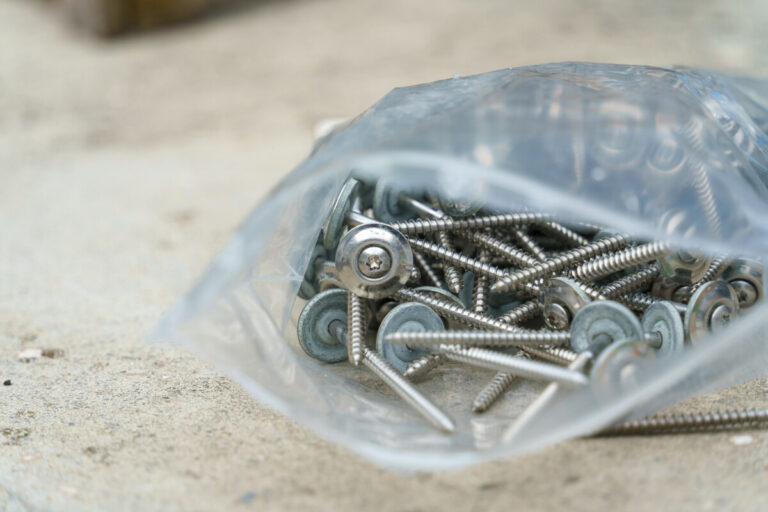
A siding screw works as a small engineered system. Head shape, diameter, thread geometry, drill point, and the sealing washer combine to clamp panels and block water. Get one of those wrong, and you risk vibration, leaks, or gradual loosening.
Diameter and Gauge
Gauge sizes like #9, #10, #12, and #14 indicate diameter, which influences pull-out strength and shear capacity. Bigger diameters often hold better, yet oversizing can raise driving torque, distort thin sheet, or fail to match the substrate.
- #9 to #10: Reliable picks for metal-to-wood siding. The slimmer core limits splitting and prevents over-torque in dense lumber or engineered sheathing, while coarse threads boost pull-out.
- #12: The standard for metal-to-metal. With the right drill point, #12 screws cut clean threads in steel studs, girts, and purlins without pre-drilling.
- #14: A helpful step up for repairs, higher wind design pressures, or enlarged holes. It also adds bite at edges and penetrations.
Threads Per Inch (TPI) and Thread Type
Thread form must match what is behind the sheet.
- Coarse threads grip wood fibers and oriented strand board (OSB), resisting backout through seasonal expansion and contraction. Select self-piercing, coarse-thread designs for metal-to-wood.
- Fine threads suit steel. They engage the threads formed by the drill point, maintaining clamp load without tearing thin metal.
- Dual-geometry patterns, commonly called Hi-Lo, improve feed and holding power in dense materials and composites.
Length and Penetration
Length is more than “panel plus a little.” The screw needs to seat the head and washer, pass the panel and any air space, then secure solidly in the substrate.
- Wood substrates: Aim for at least 1” of thread penetration into sound wood or structural OSB/plywood to meet pull-out needs.
- Steel substrates: Pick a drill point and length that let the flutes clear the top sheet before threads bite. If threads engage too early, panels can separate and threads can strip.
- Common siding lengths: 1” to 1-1/2″ for many wall profiles, adjusted for rib height, clip thickness, insulation, or furring.
Sealing Washers: Your First Line of Defense
On exposed fastener walls, the EPDM washer is the seal. As the screw seats, the rubber compresses into a tight gasket between the head and panel.
- Choose quality EPDM that resists ultraviolet (UV), ozone, and compression set. Inferior rubber hardens and cracks, turning a screw into a leak path.
- Control compression. You’re looking for a thin, even ring of squeeze-out, with no bulging and no distortion.
- Metal-bonded washers distribute load and shield the EPDM from direct UV. When painted, they blend with finished panels.
Exposed vs. Concealed Fastener Siding Systems
Identify the panel system before ordering. Exposed fastener walls leave the head and washer in the elements; concealed systems hide the screw under clips or hems. Each approach needs different hardware and techniques.
Exposed Fastener Panels (Corrugated, R-Panels, and More)
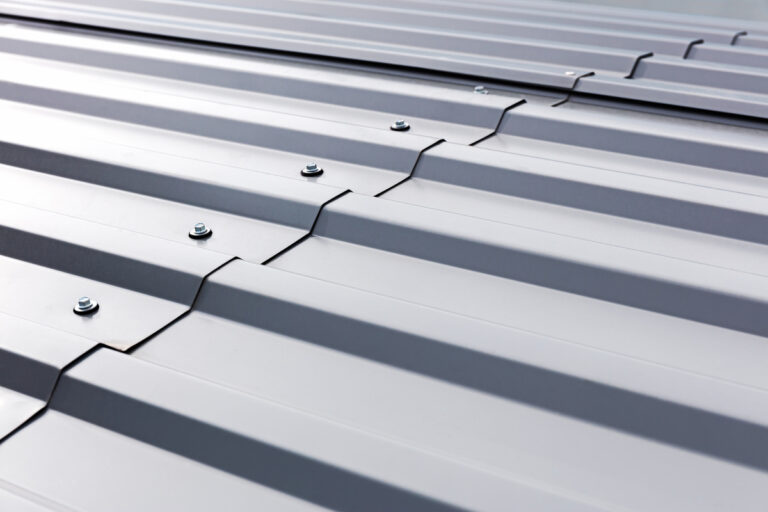
Corrugated and ribbed panels install quickly and deliver a long service life. Because fasteners remain visible, head style, washer quality, and color all factor in.
- Fastening location: On walls, attach on the low (flat). This pulls the sheet tight to the substrate and gives the washer a flat sealing surface.
- Color-matched heads: Painted heads sharpen the look. Choose finishes that match Supply Maverick’s panel colors. If your panels came from another brand, select a neutral tone or unpainted heads rather than forcing a near match.
- Washer quality: Don’t cut corners. High-grade EPDM keeps a watertight seal for years.
- Example pick, metal-to-wood: Fastgrip #10 Hi-Lo MINI-DRILLER EPDM Washered Metal Roofing/Siding Fasteners — self-piercing, coarse-thread screws with EPDM washers and hex washer heads for sealed, secure attachment to wood girts. Available in multiple colors and lengths. Shop Fastgrip #10 Hi-Lo MINI-DRILLER Fasteners.
- Example pick, metal-to-metal: #12 MetalGrip Self Drilling Roofing/Siding Fasteners (Steel to Steel) — fine-thread, self-drilling screws with EPDM washers for fastening panels to steel studs or girts. Available in 17 colors. Shop #12 MetalGrip Self Drilling Fasteners.
Concealed Fastener Panels (Standing Seam and Flush Wall Systems)
With concealed systems, you won’t see the screws, but reliability still depends on good selection and installation.
- Clip attachment: Many standing seam and flush wall designs use clips fastened with pancake head screws. The ultra-low profile clears the seam while spreading load.
- No color matching needed: Focus on point rating, substrate, and material compatibility.
- Example pick: #10 Pancake Screws Zinc Plated Self Drilling — low-profile, wide-bearing screws with a self-drilling point for steel-to-steel clip attachment in standing seam systems. Shop #10 Pancake Screws Zinc Plated Self Drilling.
Choosing the Right Material: Galvanized, Stainless, or Painted?
The fastener material affects both service life and appearance. Your goal is consistent structural performance with no rust streaks or staining.
Preventing Galvanic Corrosion (The Hidden Killer)
Galvanic corrosion happens when dissimilar metals share an electrolyte such as rainwater. The farther apart two metals sit on the galvanic series, the faster the reaction can run.
- Match metals whenever practical. Zinc-plated (galvanized) carbon steel screws pair well with galvanized panels; stainless fasteners suit stainless accessories.
- EPDM washers interrupt head-to-panel metal contact, which reduces galvanic action at the surface.
- Environment sets the rule. Dry inland sites usually suit galvanized screws. Coastal, agricultural, or chemical exposure calls for stainless (304 or 410) to resist pitting and keep a clean look.
- Don’t mix copper with steel or aluminum panels. That pairing accelerates corrosion.
Galvanized vs. Stainless Steel Screws
Each material has a clear place in wall applications.
- Galvanized (zinc-plated) carbon steel: The everyday performer. It’s strong, budget-friendly, and reliable in most inland environments.
- Stainless steel (304 or 410): The upgrade for harsh exposure such as salt air, ammonia from livestock, or industrial atmospheres. Stainless keeps heads bright and shanks intact even as washers age.
- Hybrid designs: Some fasteners combine a hardened carbon-steel drill point with a stainless head or body for speed plus added corrosion resistance. Choose based on your substrate and exposure.
Painted Screw Heads (The Finishing Touch)
Painted heads make exposed fastener projects look intentional, not improvised.
- Paint system: Choose durable coatings that align with common panel finishes and resist chalking and fading.
- Color matching: Supply Maverick’s painted screws are made to match our own standard panel and trim finishes. If your panels came from another source, skip third-party color code charts. When you contact us, include your panel color name and the specific screw stock keeping unit (SKU) you’re considering, and we’ll help you pick the closest in-stock option.
What’s Behind Your Siding? Metal-to-Wood vs. Metal-to-Metal
The substrate behind the sheet determines thread design, tip style, and sometimes the head. A wood girt demands a different screw than a 16-gauge steel stud.
Metal-to-Wood Siding Screws (OSB, Plywood, Wood Girts)
In wood, fast starts and deep thread engagement are the priority.
- Choose self-piercing, coarse-thread screws that cut through thin panel steel (20 to 29 gauge) and then lock into wood fibers.
- Target at least 1” of thread penetration into solid wood or structural sheathing.
- Example pick: #11 PG Hi-Lo EPDM Washered Metal Roofing/Siding Fasteners — a #11 Hi-Lo thread pattern with a mini self-driller tip, EPDM bonded washer, and 1/4″ hex washer head. Tested to 750 to 1,000 hours of accelerated salt spray. Ideal for corrugated or R-panel siding over wood frames. Shop #11 PG Hi-Lo EPDM Washered Fasteners.
- Skip metal-to-metal self-drilling screws in wood. Fine threads don’t hold as well and demand more torque.
Metal-to-Metal Siding Screws (Steel Studs and Structural Steel)
For steel, use self-drilling screws (often called Tek screws) that drill and tap in a single pass. Match the point rating to the total thickness of all steel layers.
- Light to medium steel: #12 MetalGrip Self Drilling Roofing/Siding Fasteners (Steel to Steel) — #12 diameter with a #3 self-drilling point, manufacturer-rated for steel up to 0.210” (beyond the typical Tek #3 general guidance), available in 17 colors with a galvanized EPDM washer. Shop #12 MetalGrip Self Drilling Fasteners.
- Heavy structural steel: #12 MetalGrip T5 Self Drilling Roofing/Siding Fasteners (Steel to Steel) — a Tek #5 point that drills through steel up to 0.500” thick. Confirm your stack-up and gauge before ordering. Shop #12 MetalGrip T5 Self Drilling Fasteners.
- Pro tip: Don’t under-spec the point. If chips can’t evacuate and the tip fails to break through before threads engage, heads can snap and shanks can strip.
Let’s Talk Drill Points: Self-Drilling, Self-Tapping, and Self-Piercing Explained
The terms self-piercing, self-tapping, and self-drilling aren’t interchangeable. Pick the wrong type, and you add time, frustration, and risk to the job.
Self-Piercing Screws (The Wood Specialist)
A sharp, needle-like point punches through thin sheet and immediately bites into wood.
- Best for: Metal-to-wood siding over girts, plywood, or OSB sheathing.
- Benefits: Quick starts, no pre-drilling, and strong pull-out in wood with coarse threads.
- Example: Fastgrip #10 Hi-Lo MINI-DRILLER EPDM Washered Metal Roofing/Siding Fasteners. The MINI-DRILLER point speeds penetration of metal panels while Hi-Lo threads deliver strong pull-out in wood. Shop Fastgrip #10 Hi-Lo MINI-DRILLER Fasteners.
Self-Tapping Screws (The Old School Option)
Self-tapping screws need a pilot hole and then form threads during installation. They see less use on modern siding work because self-drilling fasteners remove a step.
- Use cases: Detailed trim work or places where precise hole size control is required and pre-drilling is planned.
- Installation: Slower overall. A lower driver speed, about 500 to 600 revolutions per minute (RPM), helps prevent heat buildup and thread damage.
Self-Drilling (Tek) Screws (The Metal Specialist)
Self-drilling screws carry a small drill bit at the tip that creates the hole and taps threads in one motion.
- Best for: Metal-to-metal siding over steel studs or structural steel.
- Tek ratings: Match point to thickness. General guidance offers approximate ranges of up to about 0.015” for Tek #1, up to about 0.060” for Tek #2, up to about 0.125” for Tek #3 (some products are manufacturer-rated higher), up to about 0.187” for Tek #4, and up to about 0.500” for Tek #5. Always verify the specific product’s manufacturer rating for your stack-up.
- Example for light or medium steel: #12 MetalGrip Self Drilling Fasteners (Tek #3). Shop #12 MetalGrip Self Drilling Fasteners.
- Example for heavy steel: #12 MetalGrip T5 Self Drilling Fasteners (Tek #5, up to 0.500” steel). Shop #12 MetalGrip T5 Self Drilling Fasteners.
- Driver speed: 1,700 to 2,000 RPM is typical for self-drilling screws. Use an adjustable clutch and steady pressure so the point does the work.
Siding Screw Size and Length Guide
Sizing mistakes create many fastening headaches. Too small and screws back out; too large and you may crush washers or twist off heads while trying to pull thin steel tight.
Choosing the Correct Diameter
Start with the substrate and wind exposure, then pick the smallest diameter that meets your required pull-out and shear values.
- Wood substrates, standard exposure: #9 to #10 coarse-thread, self-piercing screws perform well.
- Steel studs or girts, light to medium thickness: #12 self-drilling screws are the go-to size.
- Repairs, high winds, or oversized holes: #14 FastGrip Replacement Metal Roofing/Siding EPDM Washered Screws add diameter and fresh thread bite to recover holding power without re-framing. Shop #14 FastGrip Replacement Screws.
- Don’t oversize by default. Larger diameters raise driving torque and can deform thin panels if the washer is over-compressed.
Determining the Right Length
Use this quick checklist to get the length right.
- Measure the panel thickness at the fastening point (flat or rib), and include any underlayment, furring, or air space.
- Add the height of clips or brackets for concealed systems.
- For wood, include at least 1” of thread penetration; for steel, confirm that the drill point rating covers your total stack thickness.
- Choose the next available length that meets or slightly exceeds the need without bottoming out in the substrate.
Most exposed wall panels fall between 1” and 1-1/2″. For concealed clips, length depends on clip geometry and substrate thickness. Measure twice, order once.
Common Screw Head Types for Metal Walls
Head design affects drive control, bearing area, profile, and appearance. Choose what fits the panel system and the tools you prefer.
Hex Washer Head (The Industry Standard)
Hex washer heads dominate exposed fastener siding because they clamp well, stabilize the driver, and integrate the EPDM washer for a consistent seal.
- Best for: Exposed fastener corrugated and ribbed siding.
- Pair with: EPDM sealing washers and painted heads for a tidy, finished look.
- Example for wood substrates: Fastgrip #10 Hi-Lo MINI-DRILLER EPDM Washered Metal Roofing/Siding Fasteners. Shop Fastgrip #10 Hi-Lo MINI-DRILLER Fasteners.
- Example for steel substrates: #12 MetalGrip Self Drilling Roofing/Siding Fasteners (Steel to Steel). Shop #12 MetalGrip Self Drilling Fasteners.
Pancake Head (The Low-Profile Specialist)
Pancake head screws deliver a wide bearing surface with a very low profile. They’re the standard for clip attachment in concealed systems where clearance is tight.
- Best for: Standing seam and flush wall systems using clips.
- Material choices: Self-drilling versions for steel-to-steel clip attachment; zinc-plated options for wood substrate clip attachment.
- Example for steel-to-steel: #10 Pancake Screws Zinc Plated Self Drilling. This is a #3 self-drilling point for steel-to-steel clip attachment. Shop #10 Pancake Screws Zinc Plated Self Drilling.
- Example for wood substrate: #10 Pancake Screws Zinc Plated. An ultra-thin pancake head with a self-piercing point for metal-to-wood clip attachment. Shop #10 Pancake Screws Zinc Plated.
Flat and Wafer Heads (The Specialized Options)
Flat and wafer heads show up in trim, soffits, and accessory work where a low profile helps and clips aren’t used.
- Use case: Fastening flashing or plates where a flush or semi-flush finish is helpful and peel loads at the fastener line are limited.
- Match thread and tip: Coarse, self-piercing for wood; fine, self-drilling for steel.
Expert Installation Best Practices
Even the best screw needs the right technique to work. Build these habits into your workflow, and most leaks and callbacks disappear.
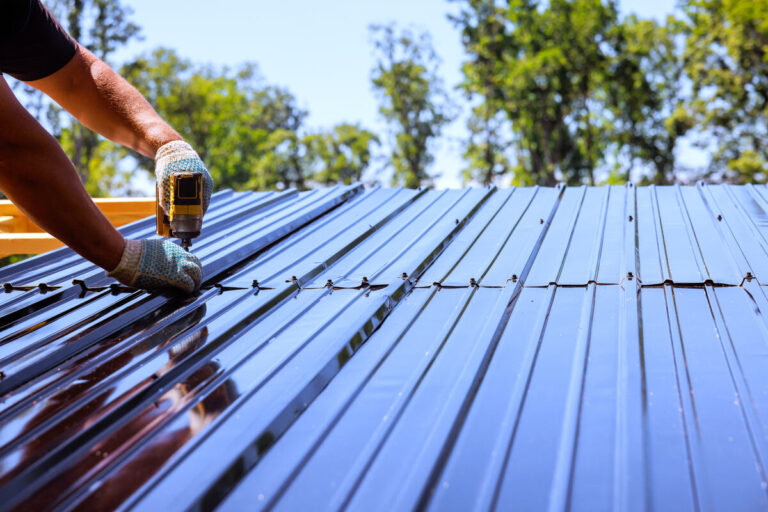
- Pick the right driver and speed. For self-drilling, run about 1,700 to 2,000 RPM with an adjustable clutch. For self-tapping, slow down to roughly 500 to 600 RPM. For self-piercing in wood, keep a straight approach and steady torque, as overspeed scuffs coatings and crushes washers.
- Hold the tool square at 90 degrees to the panel. Angled screws distort the washer and leave uneven compression that invites water.
- Watch the washer as it seats. Stop when you see a continuous, even ring of EPDM squeeze-out. Over-driving shortens washer life; under-driving leaves gaps.
- On exposed panels, fasten on the flat (low). It seats the washer and clamps the sheet to the substrate.
- Clear swarf as you go. Steel shavings will rust and stain, so brush or blow away chips consistently, especially at cut edges and screw rows.
- Keep spacing uniform. Follow panel guidance for spacing and understand that straight, even lines are stronger and look better.
- Match the point to thickness. Spun-out holes, snapped points, or heat discoloration signal the wrong drill point or driver speed.
- Pre-drill only when the system calls for it. Random pre-drilling on exposed panels leads to oversized holes and poor washer seating.
- Protect the finish. Use clean, impact-rated 1/4″ hex drivers to prevent scratching painted heads.
- Test first. Run a few screws into scrap panel and representative substrate to confirm speed, drive depth, and bite before committing.
Note: Supply Maverick supplies materials only. For local code requirements and system-specific details, consult a qualified local installer or engineer.
Troubleshooting Common Siding Fastener Failures
Problems happen. Diagnose the cause quickly and choose a fix that restores holding power and the weather seal.
Stripped Out Holes (The Most Common Problem)
Threads lose grip when a hole is reused, wood is deteriorated, or the original diameter was undersized.
- Symptoms: The screw spins without snugging, or it backs out under light load or wind.
- Fix: Step up to a larger repair screw designed for this scenario.
- Example solution: #14 FastGrip Replacement Metal Roofing/Siding EPDM Washered Screws. The larger shank and Type 17 drill point re-establish holding power in wood or thin metal, and the EPDM washer restores the seal. Shop #14 FastGrip Replacement Screws.
- Prevention: Start with the right diameter and correct penetration (at least 1” into wood), avoid over-torque, and do not reuse holes unless stepping up a size.
Leaking Screws (The Expensive Problem)
Most leaks trace back to installation, not defective product. Over-tightening crushes the washer, under-tightening leaves gaps, and an angled drive produces uneven compression.
- Symptoms: Drips or staining below fastener lines after wind-driven rain; EPDM that looks squashed, split, or off-center.
- Fix: Replace compromised screws with fresh units of the same type and length, driven straight with proper compression. If the hole is enlarged, use #14 FastGrip Replacement Metal Roofing/Siding EPDM Washered Screws to re-seal and re-clamp. Shop #14 FastGrip Replacement Screws.
- Prevention: Ease off during the final half-turn and watch the washer. Keep the driver square to the panel. Choose quality EPDM and painted heads on exposed systems.
Snapped Screw Heads (The Frustrating Problem)
Heads shear when torsional load exceeds capacity. This often happens because the drill point is under-rated for the thickness or the screw is too short, which causes threads to bite before the point breaks through.
- Symptoms: Heads twist off during the drive; heat discoloration near the tip; long, coiled metal filings on the shank.
- Fix: Select a screw with the correct point rating for the total stack thickness. For thick steel, step up to #12 MetalGrip T5 Self Drilling Roofing/Siding Fasteners (Tek #5). Shop #12 MetalGrip T5 Self Drilling Fasteners.
- Prevention: Match the point to the job, keep driver speed within range (1,700 to 2,000 RPM for self-drilling), and apply steady pressure while letting the tip do the cutting.
Why Source Your Siding Screws from Supply Maverick?
You have options. Here is why contractors and DIYers count on Supply Maverick for siding screws and accessories built for metal buildings.
The Speed Advantage (We Get Your Urgency)
Projects move fast, and so do we. Most orders placed before 12 p.m. EST ship the same day, keeping your schedule intact. We ship across the United States, Canada, Australia, and New Zealand. Carrier transit times vary, but our fulfillment team gets your order moving quickly.
Hard-to-Find Inventory (We’ve Got What Others Don’t)
Big-box aisles rarely carry what metal wall work actually needs. We do. From specialty drill points and head styles to painted heads and stainless options, our catalog is built for both metal-to-wood and metal-to-metal installs.
- Metal-to-wood go-to: Fastgrip #10 Hi-Lo MINI-DRILLER EPDM Washered Metal Roofing/Siding Fasteners for exposed fastener panels over wood. Shop Fastgrip #10 Hi-Lo MINI-DRILLER Fasteners.
- Metal-to-metal staples: #12 MetalGrip Self Drilling Fasteners for light or medium steel, and #12 MetalGrip T5 Self Drilling Fasteners for heavier sections. Shop #12 MetalGrip, Shop #12 MetalGrip T5.
- Concealed systems: #10 Pancake Screws that clear seams and hold clips firmly. They are available in zinc-plated and self-drilling versions. Shop #10 Pancake Screws.
- Repairs and retrofits: #14 FastGrip Replacement Metal Roofing/Siding EPDM Washered Screws to save wallowed-out holes and tighten loose panels. Shop #14 FastGrip Replacement Screws.
- Weather control: Foam Closures that seal perimeter and rib gaps on wall panels to block wind-driven rain, insects, and debris. Shop 3ft PBR Outside Closure Foam.
Unbeatable Value and Expertise (Backed by Manufacturing Knowledge)
Supply Maverick is the dedicated e-commerce arm of Mid-Michigan Metal Sales, which means you’re getting premium, hard-to-find components plus deep manufacturing know-how. Our goal is simple: deliver quality products at prices that won’t break the bank, with wholesale pricing and bulk-quantity discounts available.
- Need terms? Net 30 accounts are available for qualified buyers placing online orders, which is ideal for contractors managing multiple jobs.
- Questions? We’re here to help. When you reach out, include the exact product name or stock keeping unit (SKU). For example, “Fastgrip #10 Hi-Lo MINI-DRILLER EPDM Washered Fasteners, 1-1/2″, Charcoal” plus a short note on your substrate and panel type. We’ll steer you to the right option quickly.
Bottom line: The right siding screws save time, prevent leaks, and keep walls looking sharp for years. We stock the sizes, head styles, and materials pros actually use, and we ship them fast. We’re your metal supply source.
References
- Jonathan Davis. “Galvanic Corrosion: What It Is and How to Prevent It.” Builders Stainless, July 14, 2025, August 2026. https://www.buildersstainless.com/galvanic-corrosion-prevention
- The Armoloy Corporation. “Understanding Galvanic Corrosion: Concepts, Causes, and Prevention.” The Armoloy Corporation, February 14, 2024. August 2026. https://armoloy.com/understanding-galvanic-corrosion-causes-prevention-and-solutions